

The single biggest controllable factor in how smoothly your ecommerce sale closes is not the multiple you negotiate or the buyer you choose. It is how organized your information is when diligence begins. Deals that fall apart rarely die because the business was bad. They die because a buyer asked for a document, the seller took two weeks to find it, the numbers did not reconcile, and the trust quietly drained out of the room. A well-built data room is the antidote. It is the organized, secure repository of everything a buyer needs to verify your business, and assembling it properly before you go to market is one of the highest-return things you can do as a seller.
This guide explains how to build a data room for an ecommerce sale: what it is, what belongs in it, how to organize it so buyers can move quickly, how to handle security and access, and the mistakes that slow deals down or kill them. None of this is legal or financial advice. Use it to prepare for conversations with your broker, your accountant, and your attorney, and confirm the specifics for your situation before you act.
What a Data Room Is and Why It Decides Your Deal
A data room is a single secure location, almost always a cloud folder structure today, where you store every document a buyer needs to evaluate and verify your business. Think of it as the evidence file behind your asking price. Everything you claim in a listing or a pitch, the revenue, the margins, the growth, the clean operations, has to be provable, and the data room is where that proof lives. When a buyer signs a letter of intent and moves into diligence, they are essentially auditing your business, and the data room is what they audit.
Its real function is psychological as much as practical. A buyer who opens a complete, logically organized data room reads it as a signal that the seller is competent, the numbers are real, and the rest of the process will be smooth. A buyer who opens a half-empty folder full of mislabeled PDFs reads the opposite signal, and starts looking for what else might be wrong. The data room sets the tone for the entire negotiation before a single question is asked.
What a strong data room does for your deal:
- Speeds up diligence, which shortens the window where deals lose momentum and die
- Builds buyer confidence, which supports your valuation instead of inviting discounts
- Reduces price retrades by removing the surprises that justify a lower offer
- Demonstrates the business runs on systems and records, not on the founder’s memory
- Gives you control of the narrative by presenting your business the way you want it seen
The most common framing mistake: treating the data room as paperwork you assemble once a buyer asks. By then you are reacting under pressure, scrambling for documents while the buyer waits and doubts grow. Build it before you go to market, so diligence becomes a confirmation of what you have shown rather than a discovery of what you hid.
If you want the full picture of what buyers verify and why, the DTC due diligence checklist walks through the requests a serious buyer makes and how to prepare for each one.
The Financial Records Buyers Verify First
Financials are the heart of the data room, and they are where buyers spend the most time and apply the most skepticism. A buyer is purchasing future cash flow, so they need to be convinced the historical profit is real, repeatable, and cleanly documented. This is the section that most often determines whether your headline number survives diligence intact, because everything a buyer offers is built on the earnings base they believe.
The goal is to make your profit verifiable from source records, not just asserted in a spreadsheet. That means every number in your profit and loss statement should trace back to bank statements, payment processor reports, and tax filings that a buyer can reconcile independently. The more your financials reconcile cleanly across sources, the less room a buyer has to question your earnings, and the more confidently they can pay your price.
What belongs in the financial section:
- Profit and loss statements by month for at least the trailing two to three years
- A clear seller’s discretionary earnings calculation with every add-back documented
- Bank statements and payment processor reports that reconcile to the revenue figures
- Business tax returns for the same period the financials cover
- A balance sheet, accounts payable and receivable, and any debt or liabilities
The most common financial mistake: presenting add-backs you cannot prove. Buyers reconstruct your real profit from source data, and an add-back that fails verification does not just get removed from the calculation, it makes the buyer doubt every other number you gave them. Document each add-back with a receipt or statement before you ever list.
For higher-value deals, buyers often commission a formal earnings review, and understanding what that involves helps you prepare your records to survive it. Quality of earnings reports in ecommerce M&A explains what these reports test and how to make sure your financials hold up.
Operational and Platform Documentation
Beyond the financials, buyers need to understand how the business actually runs, because they are buying an operating asset they intend to take over. This section of the data room proves the business functions on systems and relationships that can transfer, rather than on knowledge that lives only in the founder’s head. It is also where owner dependence becomes visible, and owner dependence is one of the largest discounts a buyer applies.
Include the platform-level evidence that confirms the business is healthy and legitimate. For a Shopify or DTC business that means store analytics, traffic sources, and conversion data. For an Amazon business it means account health metrics, Brand Registry status, and case history. Alongside the platform data, document the operations: the standard procedures, the team and contractor arrangements, the tools and subscriptions the business depends on, and the workflows that keep orders flowing without you.
What to include in the operational section:
- Platform analytics: traffic, conversion, and sales data from Shopify, Amazon, or both
- Account health records, including any suspension, warning, or policy history
- Standard operating procedures for fulfillment, customer service, and marketing
- An organization summary of employees and contractors, their roles, and their costs
- A list of software, apps, and subscriptions the business relies on, with their terms
The most common operational mistake: leaving the business looking entirely founder-dependent. If the data room shows that only you know how anything works, the buyer prices in the risk that the business breaks when you leave. Documented procedures and a functioning team are not bureaucracy, they are direct evidence that the earnings will survive the transfer.
Legal, Contracts, and Intellectual Property
The legal section establishes that you actually own what you are selling and that it can transfer cleanly to a buyer. Diligence here is about confirming there are no hidden claims, no broken chains of ownership, and no contracts that fall apart the moment the business changes hands. Gaps in this section do not just lower offers, they can stop a deal entirely, because a buyer cannot close on assets whose ownership is unclear.
Assemble the documents that prove ownership and define your obligations. That includes your corporate formation records and ownership structure, your registered trademarks and any other intellectual property, and the full set of contracts that govern the business, from suppliers to software to leases. Pay particular attention to whether key contracts are assignable, because a critical supplier agreement that cannot transfer to a new owner is exactly the kind of surprise that derails a closing late in the process.
What the legal section should contain:
- Business formation documents, ownership records, and any operating or shareholder agreements
- Trademark registrations, design rights, patents, and proof you own your brand assets
- Supplier and manufacturer agreements, with attention to whether they are assignable
- Customer, affiliate, and partnership contracts that carry material revenue
- Any leases, licenses, financing agreements, or pending or past legal disputes
The most common legal mistake: assuming your contracts and trademarks will transfer automatically. Many supplier and platform agreements require consent to assign, or do not transfer at all, and an unregistered trademark you thought you owned can unravel a brand sale. Confirm assignability and ownership before diligence, not after a buyer’s lawyer flags it.
Because so much of this section depends on documents being correct rather than merely present, it is worth having an attorney review the legal materials before you open the room. How to hire a lawyer for your ecommerce sale covers when to bring legal help in and what to expect them to handle.
How to Organize the Data Room for Speed
A complete data room that is badly organized is almost as damaging as an incomplete one, because every minute a buyer spends hunting for a document is a minute their confidence erodes. The organization itself communicates competence, and a clear structure lets a buyer answer their own questions instead of sending you a constant stream of requests. The aim is a buyer who can navigate the room without help and consistently finds exactly what they expected where they expected it.

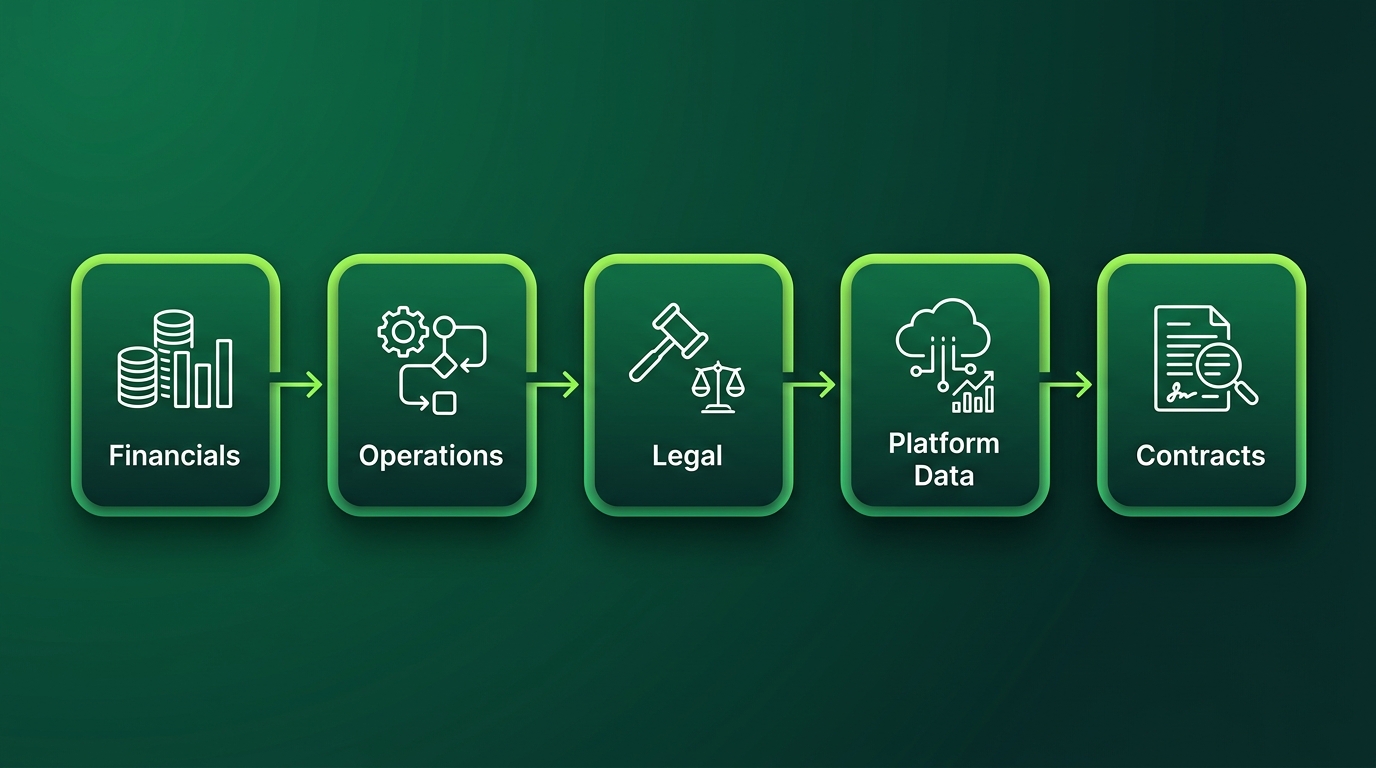
Build the room around clearly named top-level folders that match how buyers think: financials, operations, legal, platform and traffic, contracts, and corporate. Inside each, name files consistently with dates and descriptions so nothing is ambiguous, and add a short index or summary document at the top level that tells a buyer what is in the room and where. Keep the structure stable once buyers are in it, because moving files around mid-diligence creates confusion and the impression that the room is still being built.
How to structure the room for a buyer:
- Use clear top-level folders by category, not a flat pile of files
- Name every file consistently, with dates and plain descriptions, no cryptic abbreviations
- Add an index document that maps the contents so buyers can orient themselves instantly
- Keep one current version of each document and remove outdated or duplicate copies
- Lock the structure once diligence starts so buyers always find things where they left them
The most common organization mistake: dumping every file into one shared folder and hoping the buyer sorts it out. A disorganized room forces the buyer to ask you for everything, which slows the deal, signals weak operations, and gives a sophisticated buyer leverage. Spend the time to structure it, because the structure is part of the impression you are selling.
Security, Access, and Confidentiality
The data room holds the most sensitive information your business has, from financials to supplier identities to customer data, and you are showing it to people who may be competitors or who may walk away from the deal. Controlling who sees what, and when, is essential, both to protect the business if a deal falls through and to comply with your obligations around customer and employee data. Security is not a reason to hide information from a serious buyer, but it is a reason to release it deliberately rather than all at once.
Use a real data room platform or a properly permissioned cloud folder rather than email attachments, so you control access and can see what has been viewed. Stage the disclosure: share the high-level, less sensitive materials first, and reserve the most sensitive items, such as supplier names, customer lists, and detailed account credentials, until a buyer has signed an NDA and demonstrated they are serious. Keep a record of who accessed what, and be ready to revoke access cleanly if a buyer drops out.
How to handle access and confidentiality:
- Require a signed NDA before granting access to anything beyond top-level summaries
- Stage disclosure so the most sensitive data is released later, to vetted buyers only
- Use permissioned access and track who views each document
- Redact or withhold customer and employee personal data until late-stage, qualified buyers
- Be able to revoke access immediately and completely if a buyer exits the process
The most common security mistake: handing over everything at once to anyone who asks. Sensitive data shared too early with a buyer who walks away, or a competitor posing as one, can damage the business you are trying to sell. Release information in stages, tied to NDAs and buyer seriousness, so you protect the asset while still moving the deal forward.
Confidentiality runs through the entire process, not just the data room, and getting the NDA framework right at the start protects everything downstream. Confidentiality when selling: NDAs explained covers how to share sensitive details safely while keeping buyers engaged.
When to Build It and How Long It Takes
Timing is where most sellers go wrong, because the instinct is to wait until a buyer is interested before assembling the room. By then you are building under pressure, with a buyer watching the clock and reading every delay as a red flag. The sellers who run the smoothest processes build the data room before they go to market, so that the moment a buyer signs a letter of intent, diligence can begin immediately and finish quickly.
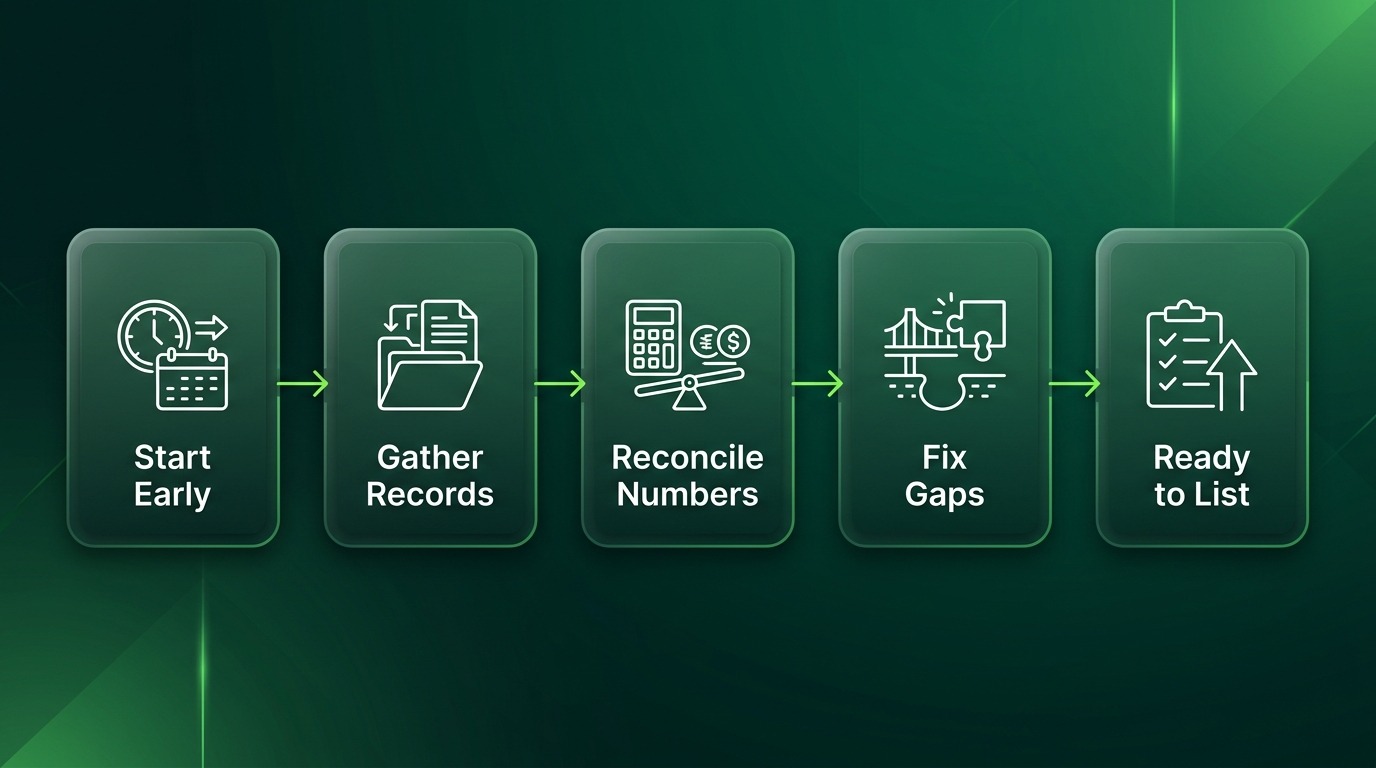
Realistically, building a thorough data room takes weeks, not days, especially the first time, because gathering, reconciling, and organizing several years of records surfaces gaps you did not know you had. That is exactly why doing it early is valuable: the gaps you find, a missing trademark registration, an add-back you cannot document, a supplier contract that is not assignable, are problems you can fix before a buyer ever sees them. Discovering the same gaps during live diligence means fixing them in front of a skeptical buyer, or not fixing them at all.
How to time the build:
- Start the data room before you list, ideally two to three months ahead of going to market
- Use the build to surface and fix gaps while you still have privacy and time
- Reconcile financials early, since this is the slowest and most error-prone section
- Keep the room current so it is ready the day a buyer signs an LOI
- Treat unexpected gaps as findings to resolve, not problems to paper over
The most common timing mistake: starting the data room only after a buyer is at the table. Building under deadline pressure guarantees gaps, slows diligence, and hands the buyer reasons to retrade. The work is the same either way, so do it early, when the findings are private and the fixes are yours to make.
Bottom Line
A data room is not administrative overhead you tolerate at the end of a sale. It is the central piece of evidence that turns your asking price from a claim into a verified fact, and it shapes how a buyer perceives your business from the first folder they open. Deals that close smoothly almost always trace back to a seller who had the proof organized before anyone asked for it.
The pattern among sellers who do well is consistent. They build the room before going to market, not after a buyer appears. They make their financials reconcile from source data so their earnings survive scrutiny. They document operations so the business does not look dependent on them, and they get their legal and intellectual property in order so ownership transfers cleanly. They organize the room for speed and control access in stages, protecting the business while still moving the deal forward. And they treat the gaps they find while building it as problems to solve in private, long before a buyer could use them as leverage.
Done that way, the data room turns diligence from an interrogation into a confirmation, and a confirmed business closes faster, at a stronger price, with fewer surprises. Start with the broader view of what buyers examine in the DTC due diligence checklist, and prepare your financials to withstand the deepest scrutiny using quality of earnings reports in ecommerce M&A.